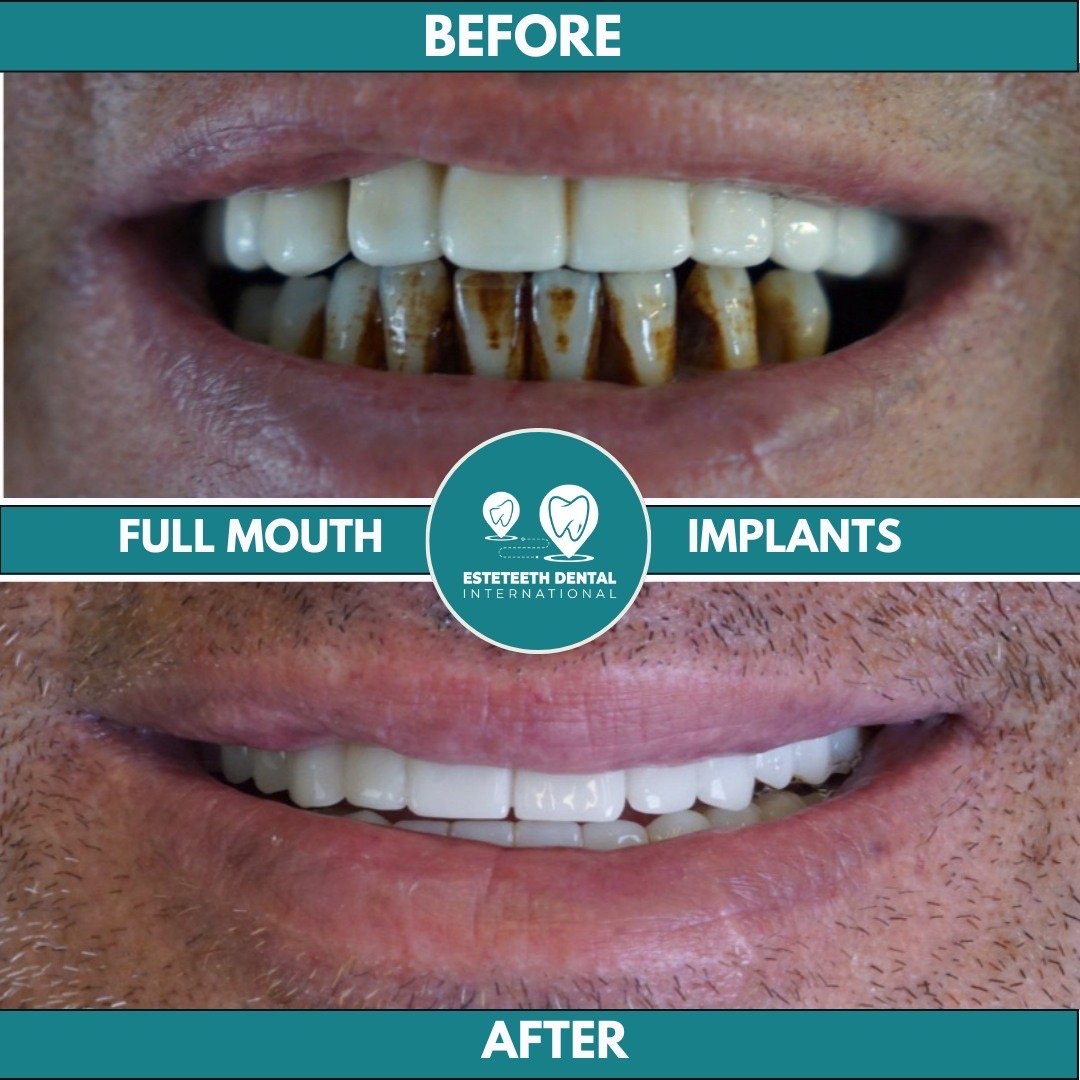
If you're missing teeth, you'll see two options come up again and again: single dental implants and All-on-4. They solve different problems. Here's how to tell which one fits your case.
Single dental implants
A single implant replaces one missing tooth: a titanium root topped with a crown. Two, three or more can be placed where several separate teeth are missing. It's the natural choice when you still have most of your own healthy teeth.
Send a few photos of your teeth on WhatsApp for a free assessment, in English, German or Turkish.
All-on-4
All-on-4 replaces a whole arch of teeth with a fixed bridge supported by just four implants (All-on-6 uses six). It's designed for people who've lost most or all of their teeth, or who want to be free of a removable denture.
Which one is right for you?
- A few missing teeth, healthy jaw: single implants usually make sense.
- Most or all teeth missing, or failing: All-on-4 restores the whole arch with fewer implants and less surgery than replacing every tooth individually.
- Loose dentures: All-on-4 gives fixed teeth that don't come out.
Process and timing
Both usually take two trips with a healing period in between, which you spend at home. Single implants and All-on-4 both start with placement and finish with the final teeth on a later visit. Our implants guide walks through the full timeline.
The honest part
Neither is automatically "better", they answer different questions. A good clinic assesses your jaw, bone and remaining teeth first and recommends only what your case needs. Send us photos or an X-ray and we'll tell you which route fits.